Soft Cells
Exploring transitional states and biological [un]certainties from a creative perspective
Curated by Diarmuid Ó Spealáin, Dervla Baker and Nic Flanagan
for the DISRUPTIVE MEDIA LAB.
Runs: 11:00 - 15:00 13 - 23 January.
Closing event: 13:00, Weds 21 January, 2026. James Barry Exhibition Centre, MTU.
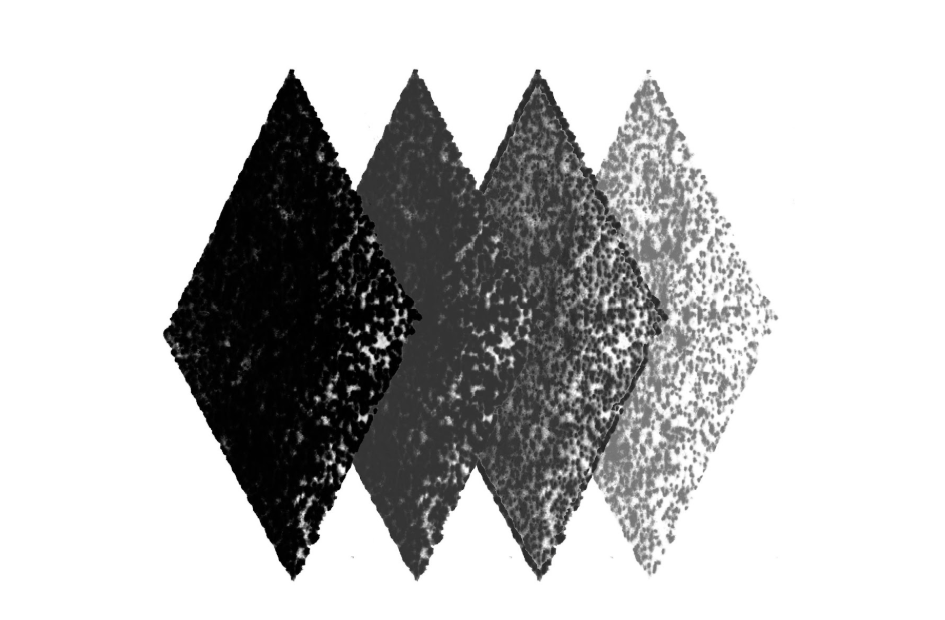
Soft Cells focuses on the transitional spaces where disciplines meet, overlap, and occasionally push back against one another. Borrowing the idea of a Soft Cell - a newly identified mathematical form whose gently curved edges allow it to tessellate infinitely in two or three dimensions, and which appears across complex biological and natural systems - the exhibition uses this concept as an artistic metaphor for cross-disciplinary practice. Here, artists, creative technologists, and scientists become makers of “conceptual tessellations,” shaping and reshaping the shared edges of their methods, materials, and imaginations.
Using a broad range of media - sound art, film, VR/immersive, print media, and zine-making - the exhibition looks at questions of scale, limits, resistance, and the shared spaces where ideas and materials cross. It reflects on boundary objects, boundary spaces and the possibilities that emerge in liminal or in-between states. Interdisciplinary by design.
This exhibition is a networked event, supported by INGENIUM, with sister events at XAMK (Mikkeli, Finland) and at the University of Rouen (Évreux, France)
Performances / Exhibition Events
SoftCells will feature a number of events - an exhibition closing event, a zines workshop and a number of experimental music performances - happening across w/c 19 January.
I can hear the ice go, created by Peter Venus and performed by Andy Ingamells
[Performance]
Monday, 19 January | 13:00 - 13:45,
James Barry Exhibition Centre
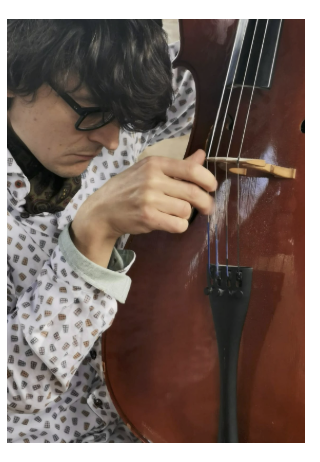
Performance for solo cello player and melting ice. In this piece a contact microphone is frozen into a block of ice. The contact microphone is connected to a laptop, which amplifies the small cracks and pops that occur as it gradually melts. Andy performs as an improvising cellist, treating the amplified sounds of the melting ice as his improvising duo partner. The performance draws inspiration from composer Helmut Lachenmann's concept of musique concrète instrumentale and guitarist Derek Bailey's notion of non-idiomatic improvisation
Exhibition Closing Event and Zines Workshop
[Workshop and exhibition closing event]
Wednesday 21 January | 13:00 - 13:45,
James Barry Exhibition Centre
CLANK> | <KLANC
[Performance] Thursday 22 January | 13:00 - 13:45,
James Barry Exhibition Centre
Clank | clanK is an experimental music duo operating at the intersection of free improvisation, process-based music, noise, and drone. Their work explores sound as a mutable material, unfolding through evolving textures, unstable structures, and shifting sonic states. Drawing on a range of traditional, contemporary, and electronic instruments, the duo weave dense and sparse sound worlds alike, embracing unpredictability, friction, resonance and dissonance. https://youtu.be/EAT36u9dFXY
MTULE (MTU Laptop Ensemble)
[Performance] Friday 23 January | 13:00 - 13:45,
James Barry Exhibition Centre
.png)
The MTULE ( MTU Laptop Ensemble) formed in 2025 bringing together practice-based artists, scientists and researchers from diverse disciplines and departments across MTU including the CSM and Nimbus. They tinker with old and new fashioned instruments, sensors, HCI, data, creative computing, experimental music and their shared curiosity for the world around them to produce chaotic new sounds.
Their first performance at the James Barry will be a short structured improvisation using prototypical instruments developed by the group.
ARTWORK / ARTIST INFO
Black Gold / Musta Kulta
In partnership with XAMK BioSampo, Angala, Finland, INGENIUM Alliance, and MTU Cork.
What art and science have in common is a relationship with uncertainty. Experimentation is a path into the unknown to uncover some kind of truth. To find a piece of the puzzle, even if it is not always clear where that piece will end up. Material revolutions unfold in this way. In tiny steps, not giant leaps. We may have our sights set on the stars, but often material technologies transform our lives through versatility, not hubris.
The film follows the biochar production process at XAMK’s BioSampo research lab in Finland, which specialises in biochar manufacturing and high-value material applications. Biochar is a carbon-rich material produced through pyrolysis, a process of heating organic material in the absence of oxygen, breaking it down into biochar, bio-oil, and gases. At sufficiently high temperatures, carbon atoms reorganise into the crystalline structure of graphite, the foundation of graphene, one of the strongest of man-made materials.
Graphene has been coveted by the astro-engineering industry for its lightweight strength. However, the material's real impact has been more diffuse. By strengthening and increasing the conductivity of other materials, graphene has reshaped material culture incrementally, rather than all at once.
Thanks to:
BioSampo XAMK: Merja Veteläinen, Juha Solio, Hanna-Kaisa Koponen, Teemu Karttaavi, Suvi Lindstén, Jari Lehtoniemi, Jaana Kokkonen, Jarmo Kilpeläinen, Mandi Teinilä
Ingenium Alliance, MTU Cork, Disruptive Media Lab, Jeremiah Spillane.
---------------
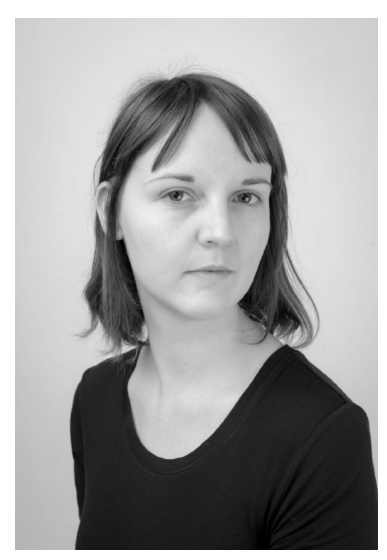
Dervla Baker is an artist, filmmaker and photographer based in Cork City. Her practice explores environmental issues and community collaboration through fine art photography and film. Notable works include “River” (2024), a short film made with Neil Quigley for Gleann a’ Phúca, a Creative Climate Action project; “field” (2023), a self-reflexive documentary made with artist/ researcher Jennifer Ahern, and ongoing collaborations with choreographer Siobhán Ní Dhunnín on projects such as Bád Shiobhán (2021-2023) and Gearrscannáin (2018-2023). Recent exhibitions include Gabháil Mhóna at Ionad Cultúrtha an Phiarsaigh, Connemara, 2023; Holding The Lismore Photo Project with Lismore Castle Arts, 2022; and The Parted Veil at The Glucksman, 2018.
---------------
A _____ To Speak
A _____ To Speak is a collection of prints and zine publication developed as the result of an interdisciplinary exchange between curator, artist and PhD candidate, Nic Flanagan and PhD Researchers at the University of Rouen Normandy, Meryem Boujnane and Salomé Lecoutour. The research project seeks to find a common ground in the ‘in-between’ from which to begin a conversation, taking root in the word, ‘resistance’, visualising the research journey.
Resistance means many things.
Our understanding of its meaning is coloured by our disciplinary language, cultural backgrounds, and mother tongue. It can also speak to a ‘resistance’ to working outside of our comfort zones. A resistance to speak across boundaries, and to the act of interdisciplinarity itself.
—------------------------------ Instagram: nflanagan_artist
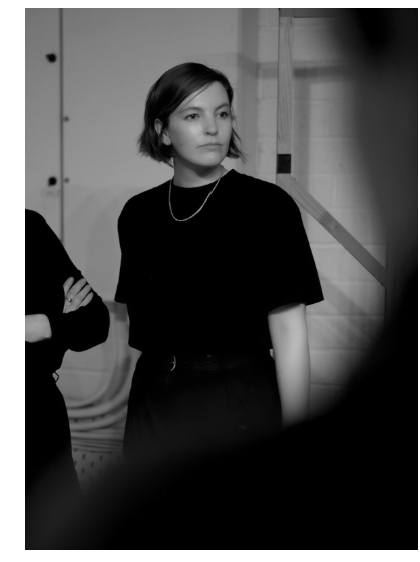
Nic Flanagan is an artist, curator and researcher based in Cork. She holds an MFA in Art + Research Collaboration from IADT, a BFA from CCAD, and is currently undertaking a practice-based PhD around progressive practice-based learning in Fine Art undergraduate education, exploring the roles of interdisciplinary practice, collaboration and curatorial care might play in enhancing student and emerging artist experience of professional practice. She is a member of collaborative duo BAN-EEE-UKT, Cork Printmakers, Backwater Artists Network, British Council Ireland alumni, and current curatorial consultant for Nimbus Research Centre Cybersecurity SFI Discovery funded interdisciplinary art-science programme.
Her research-based arts, collaborative and curatorial practices employ humour and accessible forms of visual and written language, such as film posters, and illustrative and text-based works, alongside performative and lens-based medias to explore threads of dissent and theories of care within creative and cultural practices. Works are designed with a playful, tongue-in-cheek reproach as a means of creating entry points into often complex, research-heavy topics. During these research journeys, Flanagan adopts a position in flux between insider and outsider in a conversation with no fixed end.
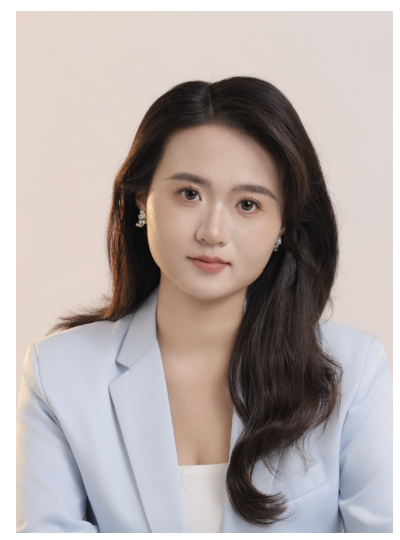
Meryem Boujnane is a PhD in Microbiology at the CBSA lab, University of Rouen (France), under the supervision of Professor Nathalie Connil. The topic of her thesis is “The Role of Catecholamines on Probiotic Bacteria, Pathogenic Bacteria, and their interaction with the Host.” Her research focuses on investigating the impact of human stress on microbiota-associated bacteria.
---------------
Unfixed: A Study in Physical Instability
Matter is often shown as stable and discrete. At smaller scales, it is neither. Motion, fluctuation, and probability govern structure more than shape. Unfixed: A Study in Physical Instability dissolves the diagram, presenting matter as a temporary negotiation rather than a fixed object.
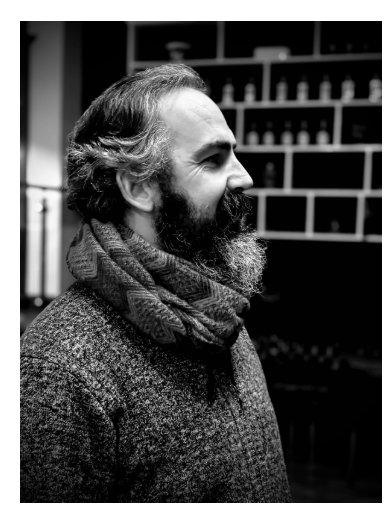
Diarmuid Ó Spealáin is an audiovisualist and researcher working at the intersection of culture, education and technology, exploring how sound, image, and interaction can generate new creative and experiential learning spaces. His work is informed by improvised and procedural approaches.
---------------
The Butterfly Effect
(3:17 min)
A 360° video performance by Community Educator Bachelor’s students from South-Eastern Finland University of Applied Sciences (XAMK)
The butterfly effect describes a property of our incredibly complex and deeply interconnected world: a small event can influence a much larger system.
This art project invites viewers to reflect on the world as a place shaped by our choices − choices that can lead to both positive and negative outcomes. While we cannot end wars on our own, we can create peace around us through kind words and meaningful actions. While we cannot stop climate change alone, we can set an example and help build a better world for ourselves and others.
Butterflies symbolize transformation, freedom, and rebirth. The Greek word for butterfly, psyche, is also the word for soul.
This work was created as part of the INGENIUM Education Lab project. Students from the Game Education course at XAMK participated in a session led by butterfly specialist Dr. Kimmo Saarinen, who introduced scientific perspectives on butterflies. The students wrote and produced a three-part video piece. At the beginning of the video, the butterfly represents the beauty of nature and the freedom of human rights. Our choices can contribute to good, but they can also cause harm and lead toward chaos. In the second part, chaos unfolds as peace and the environment are neglected. The final section, however, offers hope: the world remains beautiful, and we still have the power to promote goodness and positive change.
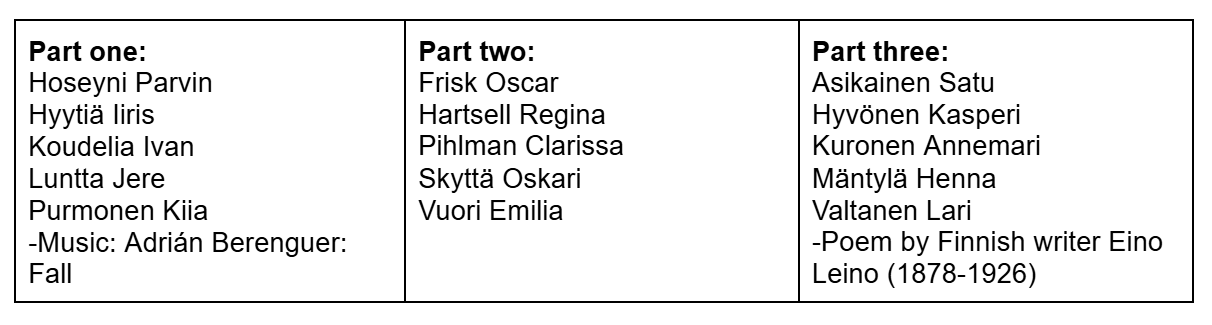
Authors of the Work
---------------
Tipping Points, by Brian Sheehan

This piece takes as its material the audio of a Ted talk titled ‘The Tipping Points of Climate Change — and Where We Stand’, given by Johan Rockström, Director of the Potsdam Institute for Climate Impact Research. Scan the QR code to view the original talk on YouTube.
The talk explains how many of the Earth systems that support and regulate the biosphere are being pushed beyond their limits by human activities, causing climate change, loss of biodiversity, ocean acidification, and more. These systems are now reaching tipping points beyond which the equilibrium that has allowed life on Earth to flourish for millennia may be irreversibly disrupted.
The piece warps the audio of the Ted talk using a chaotic process of control. Sometimes this process sits at an equilibrium that allows Rockström’s speech to be understood, however when certain tipping points are exceeded, intelligibility is lost. Which sounds best?
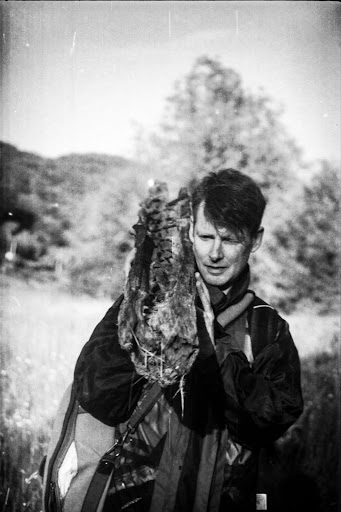
Brian Sheehan is a musician and researcher based in Cork City. His musical practice includes traditional, folk and electronic music. He is currently in the early stages of a PhD research project at MTU Cork School of Music on the topic of Data Sonification, investigating the ways in which sound generates meaning.
---------------
Molecular Melodies - Soundscapes From 3D Protein Structures
Proteins are macromolecules found in all biological systems; they are essential for life and serve several functions. Proteins are composed of amino acids joined together by peptide bonds. Different proteins have different numbers, natures, and orders of amino acids. Protein analysis involves the correct interpretation and categorisation of protein data. We can use artificial intelligence and data visualisation to study these complex structures. However, these analysis methods do not reveal everything; protein sonification has yet to be explored in adequate detail. We can see what proteins look like, but what if we could hear what they sound like? In this exhibition we also show how these protein data structures can by physicalised by 3D printing.
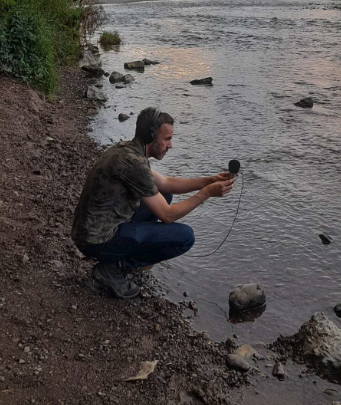
Cárthach Ó Nuanáin is an intermedia, interdisciplinary artist and researcher whose practice is rooted in the sounding world. He lectures at MTU Cork School of Music and is the current course coordinator of the MA/MSc in Music & Technology.
www.carthach.ie
---------------
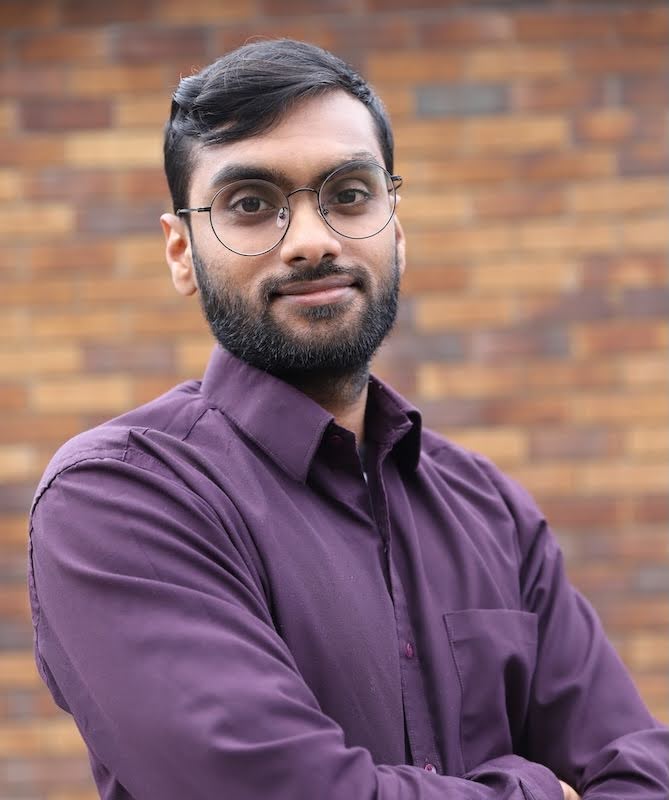
Venkata Vamsi B Yallapragada is an interdisciplinary researcher who works at the intersection of biology, photonics, and creative science dissemination. His creative ideas explores how the invisible molecular world can be experienced through sound. He received his Ph.D. from University College Cork, where he specialized in designing proteins with optical properties for medical diagnostics.
Vamsi has collaborated with teams in AI, machine learning, virtual reality, and hardware development, bringing a multidisciplinary lens to his work. "Molecular Melodies" represents his ongoing exploration of how we can hear and feel the architecture of life itself—transforming proteins from abstract data into music you can actually groove to.
---------------
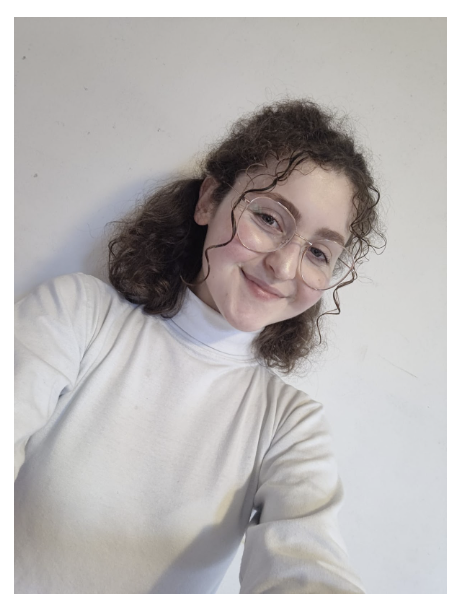
Isabel Ronan is a multidisciplinary PhD candidate in the School of Computer Science and Information Technology at University College Cork (UCC). Her doctoral research focuses on the use of Artificial Intelligence to improve palliative care outcomes for nursing home residents. Her artistic interests include the representation of complex geometric structures in sonic space and the use of AI for music generation. Her additional technical interests include Bluetooth localization systems, synthetic text generation, and natural language processing.
Isabel has been actively involved in the Cork music scene in both academic and community settings for nearly ten years. "Molecular Melodies" is one of her most cherished projects and conveys a marked algorithmic approach to composition, emphasising both the artistic potential of molecular structures and the educational opportunities afforded by sound.
---------------
.png)